What EATS 2026 put on the table, and why so much of it starts at the ab initio stage
From 3 to 5 November 2026, more than a thousand people who train pilots, cabin crew and engineers met at the Estoril Congress Centre in Cascais for EATS, Europe's largest aviation training summit. The theme was "Competency, Technology and Resilience". Under it sat a question that kept coming back in every session: how do you produce pilots who are ready for the airline when instructors are scarce, budgets are tight, and regulators now want proof of what you train?
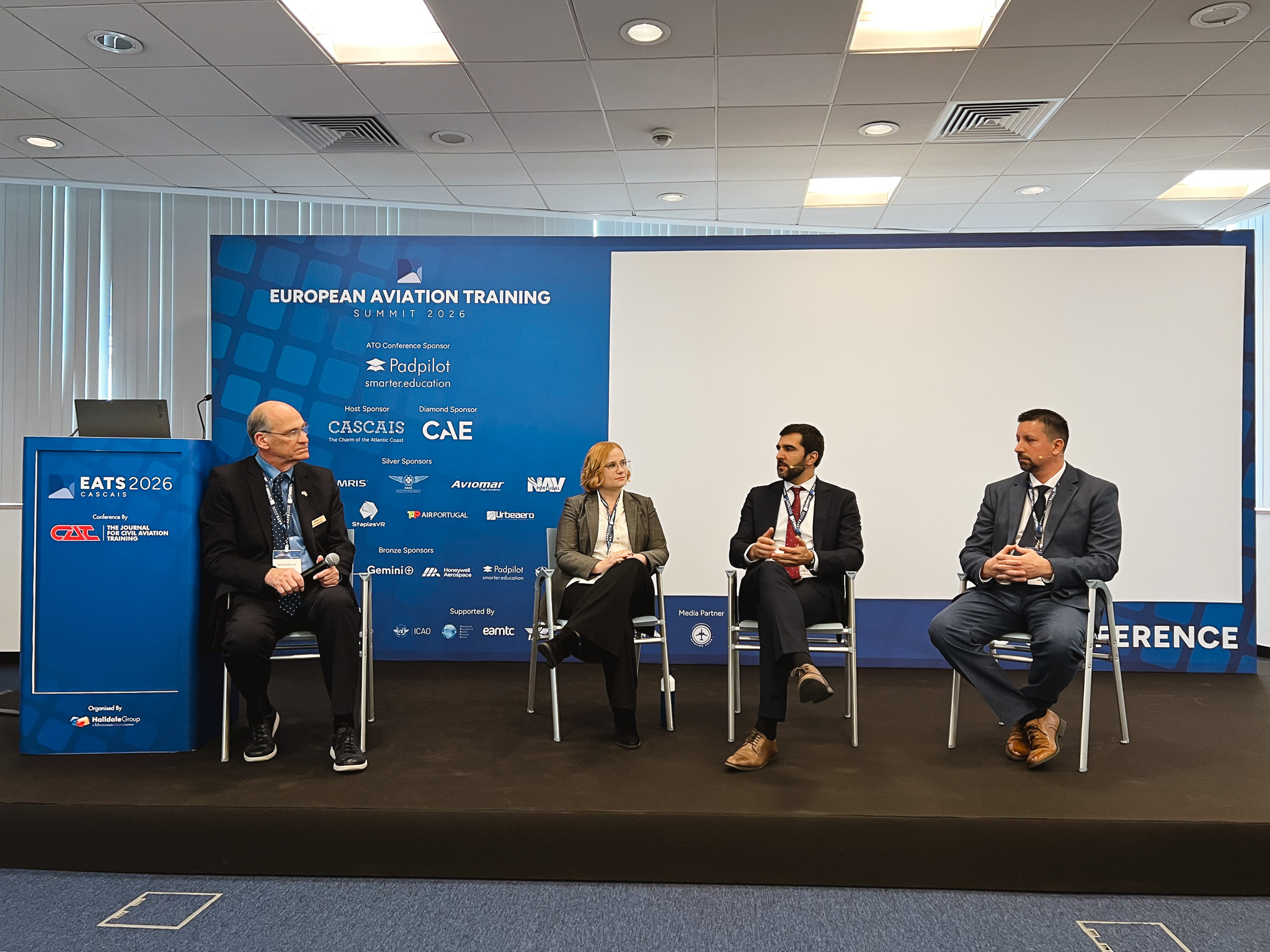
Sevenair Academy took part as a speaker. With Symbiotics, we gave a joint session on pilot assessment and the human side of training, from the point of view of a flight academy that trains cadets every day at Ponte de Sor. Below are the issues we think matter most, and where we believe flight academies belong in the debate.
What was on the table
Three pressures ran through the programme. Competency-based training (CBTA and EBT) has moved from adoption to proof, and IATA ran a full-day workshop on getting these programmes approved. Instructors are scarce: a recent Halldale Heads of Training report found that training leaders now name them as their biggest pipeline risk, ahead of simulators, candidates and money. And human factors came up again and again in the pilot, cabin crew and maintenance sessions.
Many of these problems start at the academy. The competencies an airline checks in the simulator are first built in ab initio training, and so are the habits a pilot takes into the airline. Our session looked at one of those habits.
The Mind in the Cockpit
Our session, "Building Resilience in Flight Training: Preparing the Next Generation of Aviators", was given by Caroline Creane, aviation psychologist at Symbiotics, and Miguel Brandão, Chief Commercial Officer at Sevenair Academy. Symbiotics provides psychometric tests and assessment services to ATOs, airlines and operators through its ADAPT platform. Sevenair has run more than 900 candidate assessments with them since 2020.
Caroline started with perfectionism. A 2026 meta-analysis by Curran, Hill and Pose found that it has risen steadily among 18 to 26 year olds over the past 35 years, and twice as fast among students. The most harmful form is socially prescribed perfectionism, the belief that other people expect you to be flawless. It is linked with fear of failure, self-criticism, indecision and avoiding uncertainty. Flight training feeds it, with constant checks and debriefs, high costs and family expectations, and a competitive job market at the end.
Symbiotics surveyed 32 instructors from different ATOs. All of them had seen behaviour linked to perfectionism or fear of failure, 89% had changed how they teach because of it, and 58% had seen a student fail or leave training for that reason. Most believed resilience can be trained, but 72% said they lacked the resources to deal with it fully. Every one of them said it would help to know a student's tendencies before training starts. What worked best for them was giving students more responsibility, frequent positive feedback, and permission to make mistakes.
Miguel then explained how Sevenair uses this. Every cadet applicant since 2020 has taken the ADAPT assessment, and the results sit alongside our own interviews in the selection process. After selection the profile stays with the instructors, who get a short summary of each cadet's strengths, points to watch and approaches that tend to work. We look at it again at progress checks, next to CBTA competency data. Competency assessment shows what a cadet needs to work on; the profile helps the instructor understand why.
He showed it with an illustrative case. A cadet with strong aptitude scores but a strong pull towards perfectionism keeps chasing the perfect landing in circuits, goes quiet in debriefs and asks to delay the first solo. Knowing the profile, the instructor lets the cadet lead the debrief, talks about their own early mistakes and treats a go-around as a good decision. The cadet goes solo within the planned phase and starts asking questions earlier.
The result for us is that we know what to watch for before the first flight, instructor time goes where it is needed, and support carries on when a cadet changes instructor. The profile guides the instructor, and decisions about a cadet stay with experienced people: instructors, the Training Board and the Head of Training. Our main takeaway is that resilience can be trained, and it works best when it is part of the syllabus from day one.
Why Sevenair has something to add
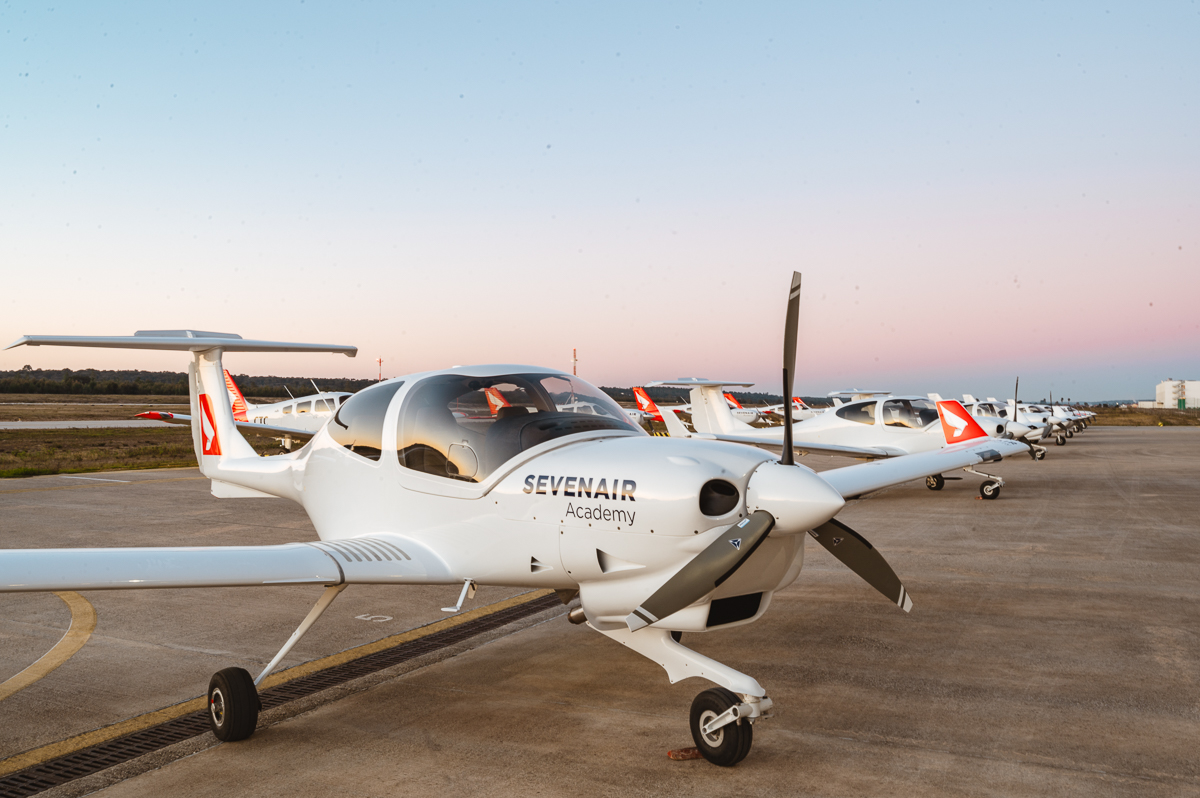
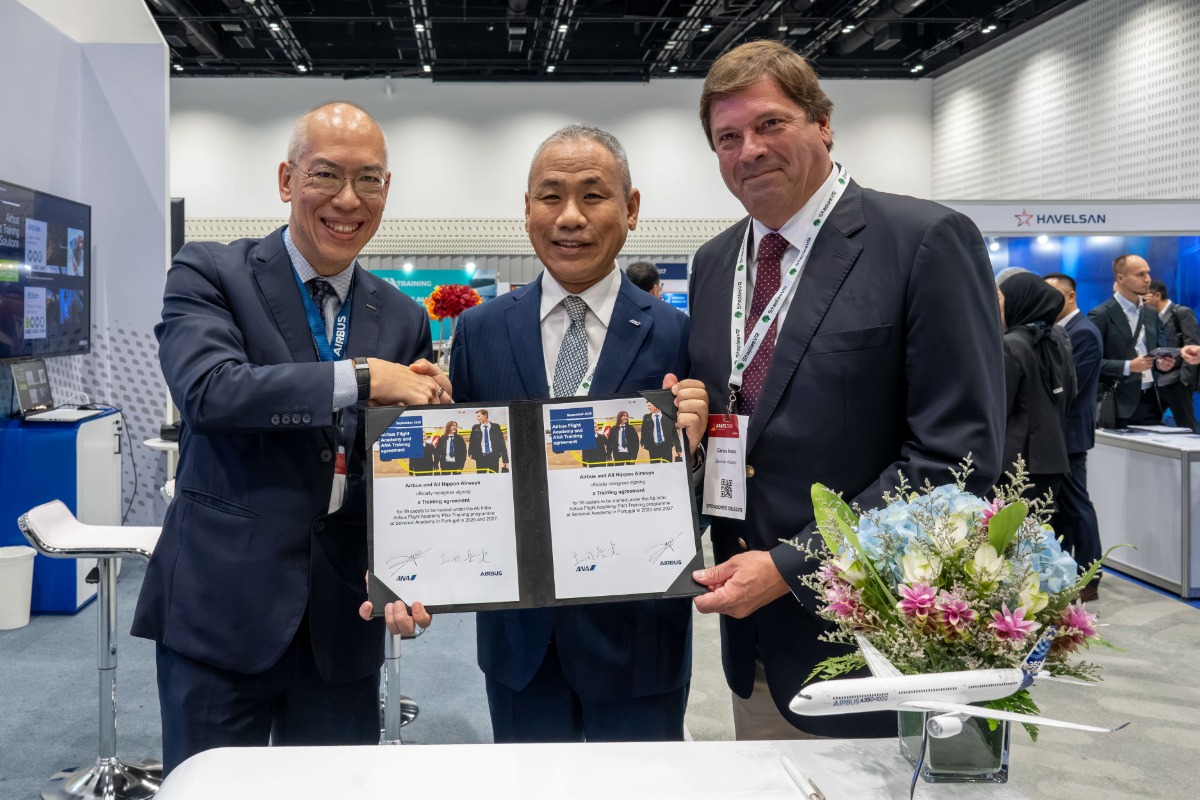
We train at Ponte de Sor aerodrome with a fleet of 44 aircraft, almost all with glass cockpits, on a campus built for professional pilot training. As part of the Airbus Flight Academy network, and with cadet classes for Royal Brunei Airlines and ANA, we train to what airlines expect after the licence. We also run our own Flight Instructor course, so instructor development and standardisation are part of our daily work. And because our courses run from the Integrated ATPL to airline cadet programmes, we follow the same pilots from their first lesson to the day they join the airline.
What comes next
At EATS 2026 nobody was still arguing about whether training should be based on competency and evidence. The open question is how to do it well and how to prove it, and airlines cannot answer that alone.
Flight academies sit at the start of the pipeline. We decide who begins, we shape the first habits, and we train many future instructors. Sevenair Academy will keep taking part in this conversation, with Symbiotics, our airline customers and the wider training community.
Sources